Ulrich Jung · 31 August 2026
Scientists have documented an extraordinary increase in fog density throughout the Nebelora valleys during the current month. Measurements indicate levels surpassing all previous records by a significant margin. This phenomenon has drawn attention from researchers specializing in atmospheric studies within the fog realms. The unusual conditions are attributed to a combination of climatic factors unique to the region. Experts note that sustained low temperatures and high humidity have contributed to the formation of denser fog banks than typically observed. Additional factors include reduced wind patterns that allow fog to accumulate without dispersion.
Advanced Measurement Techniques
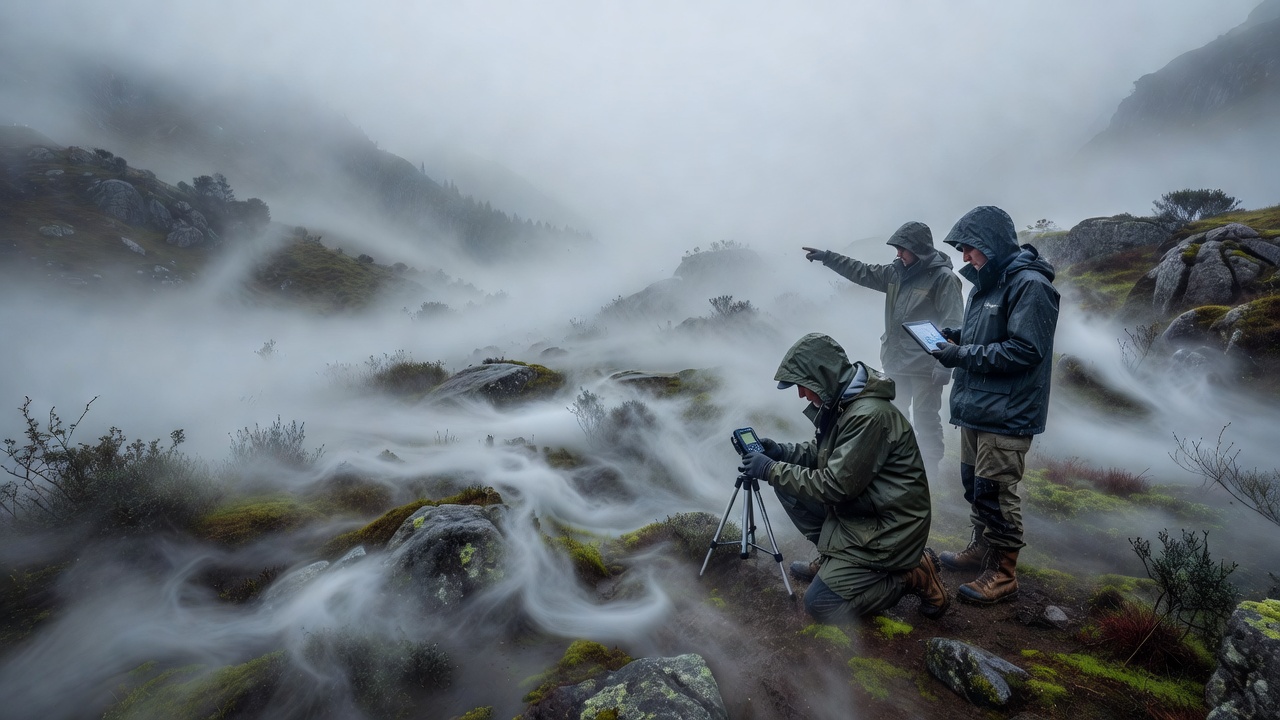
Teams deployed specialized sensors across multiple valley sites to capture precise data on fog particle concentration. These instruments recorded average densities reaching 850 grams per cubic meter, compared to the historical norm of 600 grams. Daily monitoring over four weeks revealed consistent peaks during early morning hours. Calibration of equipment ensured accuracy despite the challenging misty environment. Analysis of particle size distribution showed a predominance of smaller droplets enhancing opacity. Further investigations involved satellite imagery integration to map fog extent. Results confirmed coverage extending beyond usual boundaries into adjacent highlands. Collaborative efforts with local observers provided ground validation for remote readings. Data processing utilized advanced algorithms to filter noise from natural variations.
Consequences for Nebelora Ecosystems
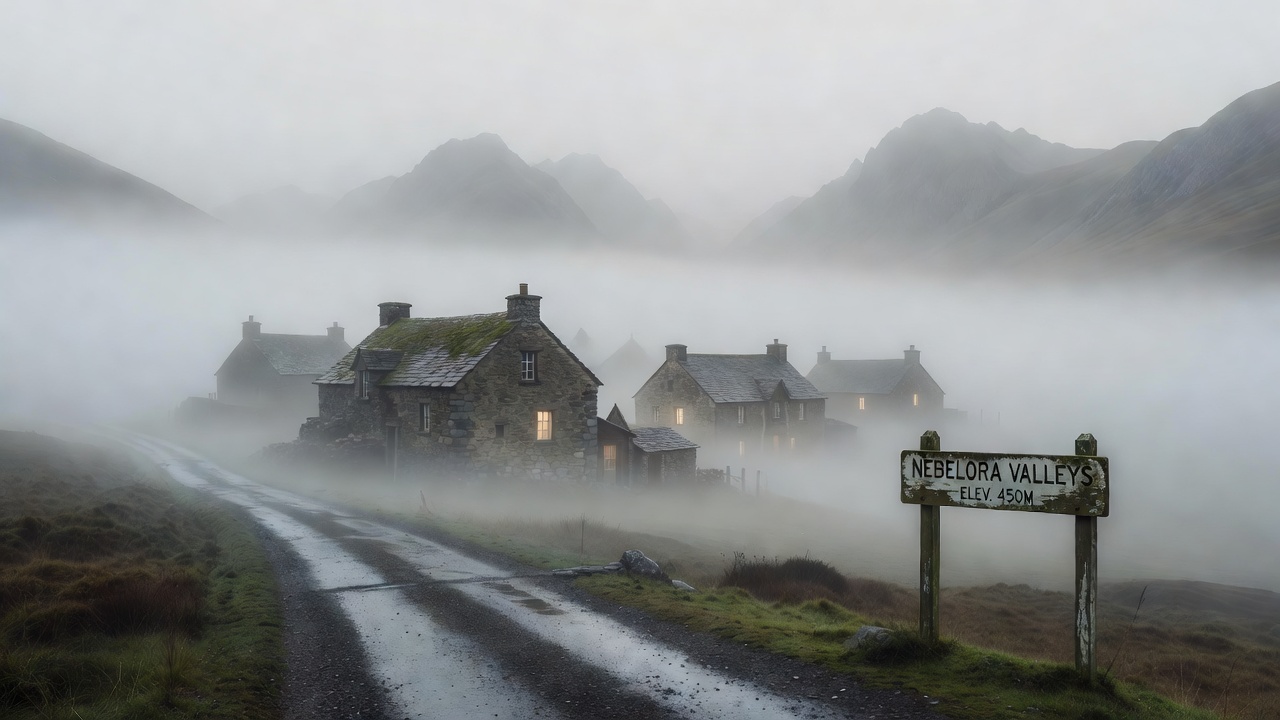
The heightened fog density has influenced local vegetation patterns, promoting growth in certain moss species adapted to moist conditions. Animal behaviors have shifted, with nocturnal creatures extending activity periods due to prolonged low visibility. Human settlements report difficulties in transportation, necessitating enhanced navigation protocols. Agricultural yields in fog-dependent crops appear stable, yet concerns arise regarding long-term moisture accumulation effects on soil composition. Researchers emphasize the importance of continued observation to understand potential climate linkages. Public advisories recommend caution during peak density times to avoid disorientation in the valleys. This event underscores the dynamic nature of Nebelora's atmospheric systems. Ongoing studies aim to predict future occurrences based on current trends and historical data comparisons.